
SHA-256 Explained: How Algorithms Power Bitcoin Mining in Australia
If you are new to crypto, Bitcoin, or mining, the term SHA-256 algorithm can feel overwhelming. It is often explained in ways that assume technical knowledge, which turns people away before they ever really understand it. In reality, SHA-256 is much simpler than it sounds, and once it clicks, the entire Bitcoin mining process becomes far easier to reason about.
This guide explains SHA-256 in plain English, what algorithms mean in the crypto space, and why modern Bitcoin mining hardware focuses so heavily on efficiency. It is written with beginners in mind and tailored to Australian conditions.
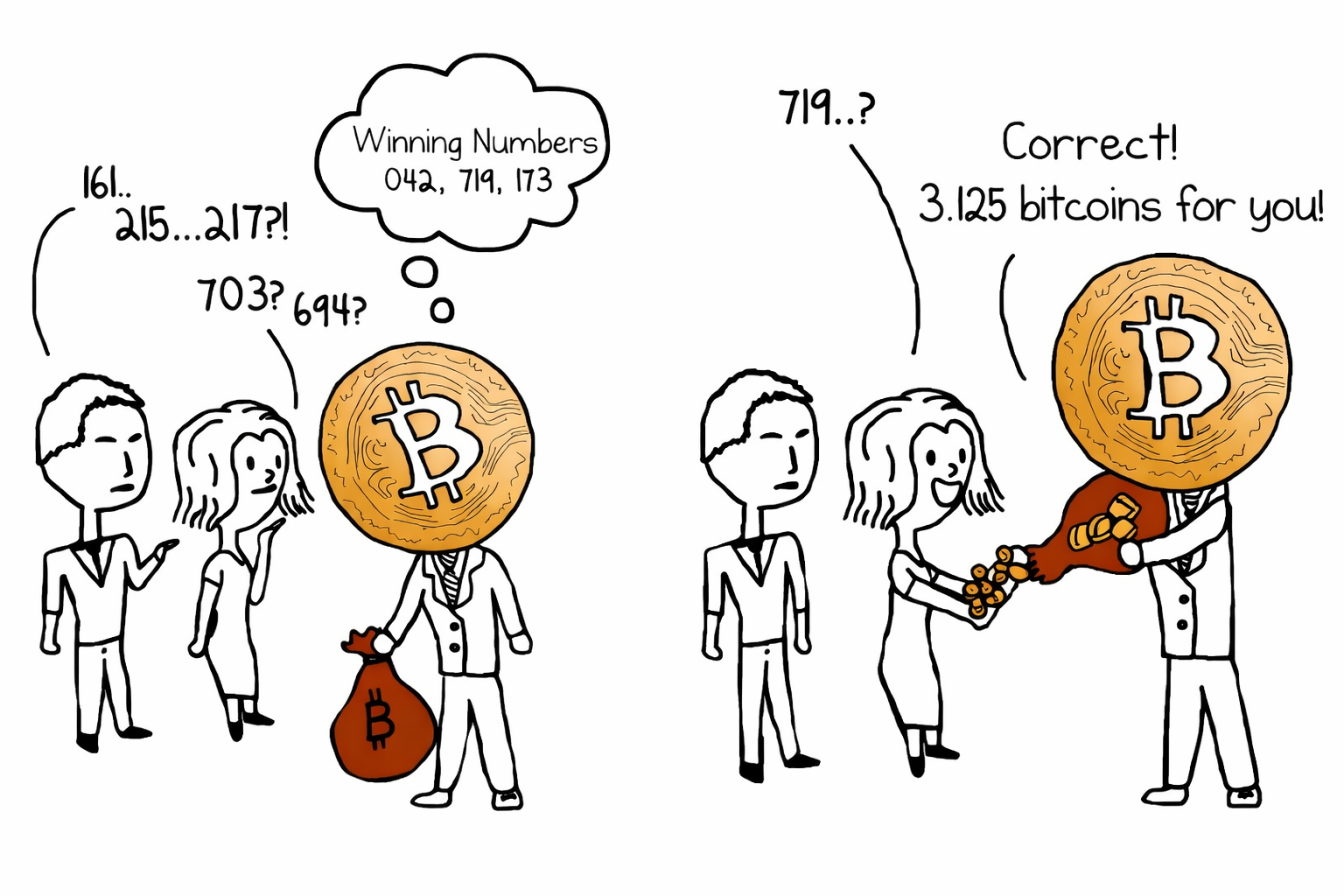
Bitcoin mining explained visually: miners repeatedly ‘guess’ SHA-256 hashes until one meets the network rules, earning the current 3.125 BTC block reward
What does “algorithm” mean in crypto?
An algorithm is simply a fixed set of instructions that always behaves the same way. You give it an input, it follows its rules, and it produces an output. There is no judgement, learning, or memory involved.
In crypto, algorithms are used to process and secure data. Bitcoin relies on a specific algorithm to protect transaction history and to decide which miner earns the right to add the next block to the blockchain. That algorithm is SHA-256.
If your interested in learning more about dedicated algorithm hardware, What Is ASIC Mining? is a great read about the evolution of mining hardware over time.
What is SHA-256 in simple terms?
SHA-256 is a mathematical process that turns data into a long string of letters and numbers called a hash. What matters is not the appearance of the hash, but the behaviour of the process.
The same input always produces the same output. A tiny change to the input produces a completely different output. Once a hash is created, it cannot be reversed back into the original data.
A useful way to think about SHA-256 is as a digital fingerprint machine. You can fingerprint anything, but you can never rebuild the original object from the fingerprint alone.
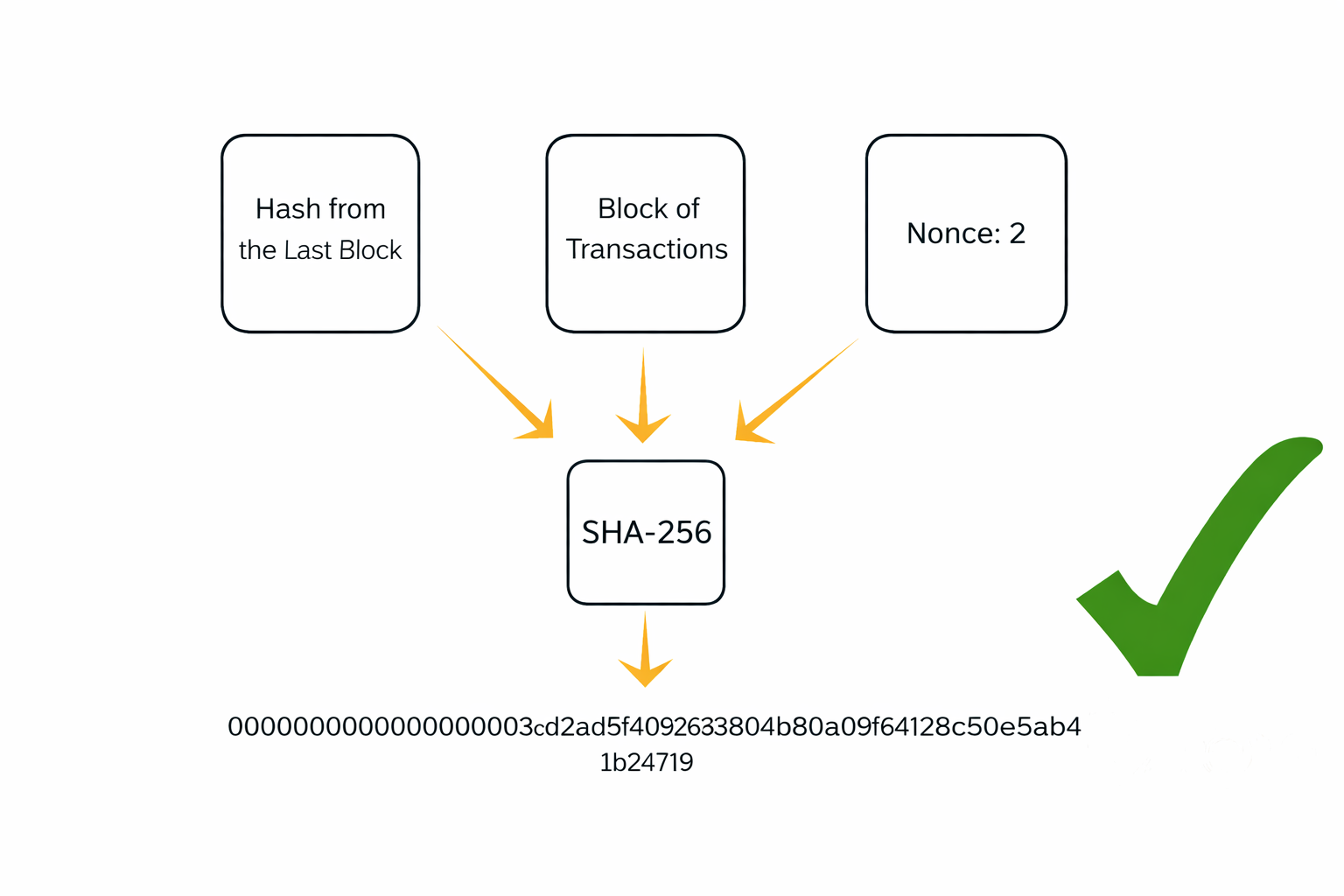
Simple diagram showing how SHA-256 combines block data and a nonce to produce a valid Bitcoin hash
How SHA-256 is used in Bitcoin mining
Bitcoin mining is not about solving puzzles or cracking codes. Miners are repeatedly running block data through the SHA-256 algorithm and checking the result.
Each attempt produces a hash. That hash is checked against the network’s current difficulty rules. If it does not meet the requirement, the miner changes the input slightly and tries again. This repeats endlessly across the network.
There is no sense of progress from one attempt to the next. Each attempt is independent. This is why mining is often compared to guessing numbers rather than solving equations.
There is a difference in how your hardware is set up to either solo mine or pool mine. Solo mining involves configuring your miners to attempt to solve a block indipendent from all competing miners on the network, while pool mining combines you and other peers hashing power into a “pool” for a greater chance at solving a block. In pool mining, the block reward is split among all people in the pool; The pool host also typically takes a larger cut of the block reward as well.
What hashrate really means
Hashrate is simply a measure of how many SHA-256 attempts a device can perform per second. When a miner is rated in gigahashes or terahashes per second, that number is describing how many guesses it can make every second.
A higher hashrate means more attempts, which improves the odds over time, but it never guarantees success. Bitcoin mining is always probabilistic.
Why efficiency matters so much in Australia
Two devices can run the same SHA-256 algorithm and still be very different in practice. The difference usually comes down to how much electricity is required to produce each unit of hashing.
In Australia, efficiency matters because power costs, heat output, and household electrical limits are real constraints. A miner that uses less power for the same amount of hashing produces less heat, runs quieter, and fits better into home or solar-assisted setups.
Luckily, there are calculators available to help best determine how many miners you can run (Using the most modern and efficient chips) per day with your excess kWh overhead.
Why Bitcoin uses specialised mining hardware
SHA-256 is extremely repetitive and predictable. That makes it perfect for hardware designed to do one task exceptionally well.
Over time, Bitcoin mining hardware evolved away from general-purpose computers and towards specialised devices built specifically to compute SHA-256 efficiently. These devices remove unnecessary features and focus entirely on power-to-hash optimisation.
This is why your product pages emphasise watts, thermals, and efficiency alongside hashrate. Those numbers matter far more than raw size or appearance.
Why GPUs are poor at SHA-256 mining
Graphics cards are designed to handle many different workloads. SHA-256 does not need that flexibility.
When a GPU is used for Bitcoin mining, much of its hardware goes unused while still consuming power. The result is poor efficiency and excessive heat. Bitcoin mining rewards specialisation, which is why purpose-built SHA-256 miners exist at every scale.
The GPU vs ASIC mining comparison isn’t a debate, it’s strictly fact.
How SHA-256 shapes the Bitcoin mining ecosystem
Because Bitcoin uses SHA-256, the entire mining ecosystem has evolved around efficiency rather than brute force. Improvements focus on lowering energy use, improving thermal design, and making devices suitable for long-term operation.
This is why Bitcoin mining can still make sense as a learning exercise or technical hobby. The same algorithm and rules apply whether a miner is large or small. The difference is scale, not process.
Miners like the Bitaxe and the NerdQaxe++ both utilise the most modern and efficient SHA-256 ASIC chips the market has to offer today, while maintaining a smaller footprint more suitable for households compared to industrial miners utilising the same chip.
The core idea to remember
SHA-256 is not magic, and Bitcoin mining is not mysterious. SHA-256 is simply a fixed algorithm that turns data into a secure fingerprint. Bitcoin miners run that algorithm repeatedly, searching for a result that fits the network’s rules.
The devices that matter most are not the ones that guess the hardest, but the ones that guess the most efficiently. In Australia, where power and heat are real considerations, understanding this relationship between algorithms, technology, and efficiency makes Bitcoin mining far easier to approach.