
Bitaxe vs NerdQaxe++: Understanding the Difference Without the Hype
If you’re looking into open-source Bitcoin mining hardware, you’ll quickly come across two closely related devices: the Bitaxe and the NerdQaxe++. They’re often presented as very different products, but in practice, they’re part of the same ecosystem and operate in much the same way.
The real difference between them isn’t how they mine Bitcoin — it’s simply how much hashpower they deliver, and what that means for a home setup.
This article explains that difference clearly, without stretching comparisons or inventing use cases that don’t exist.
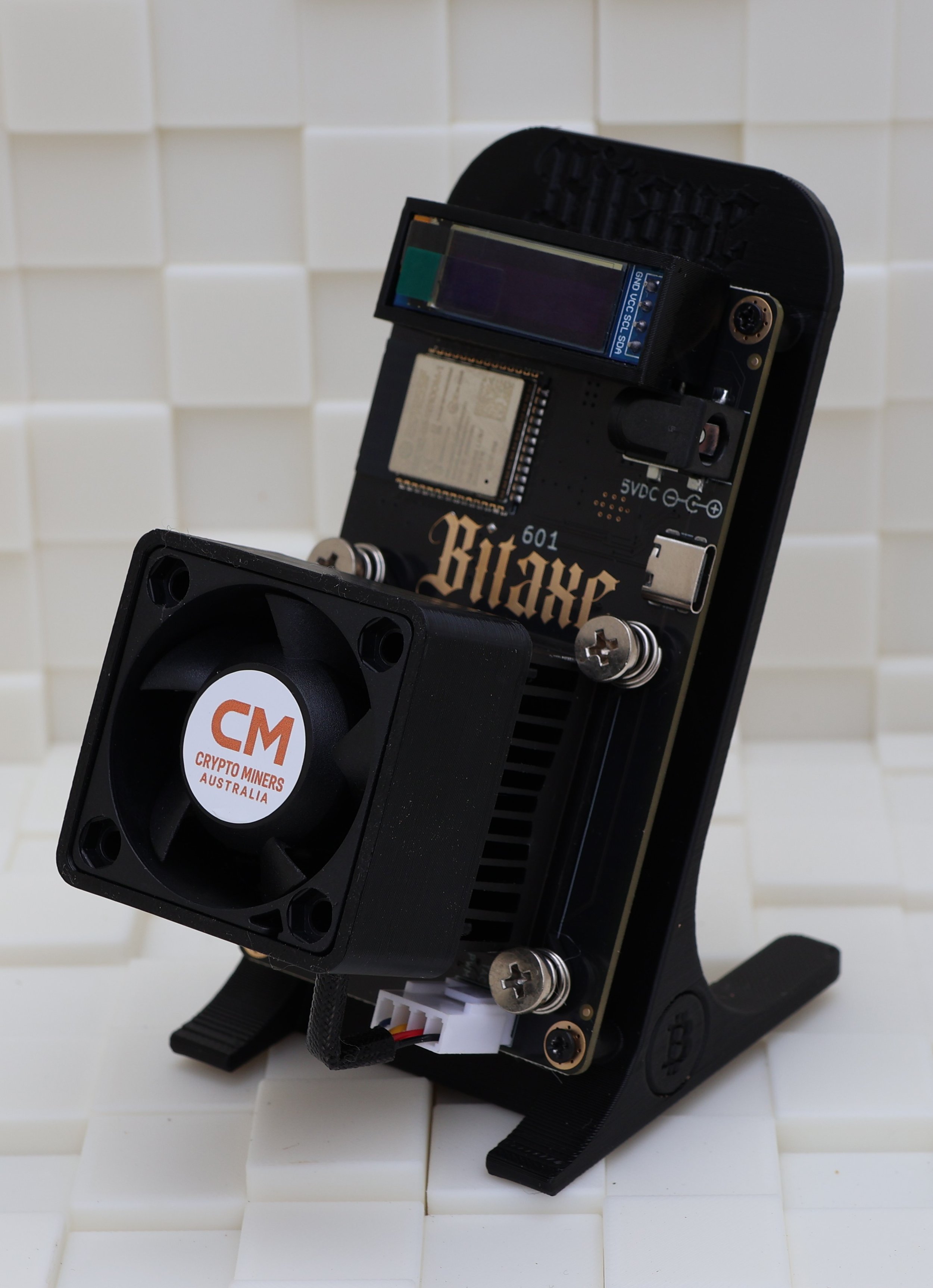
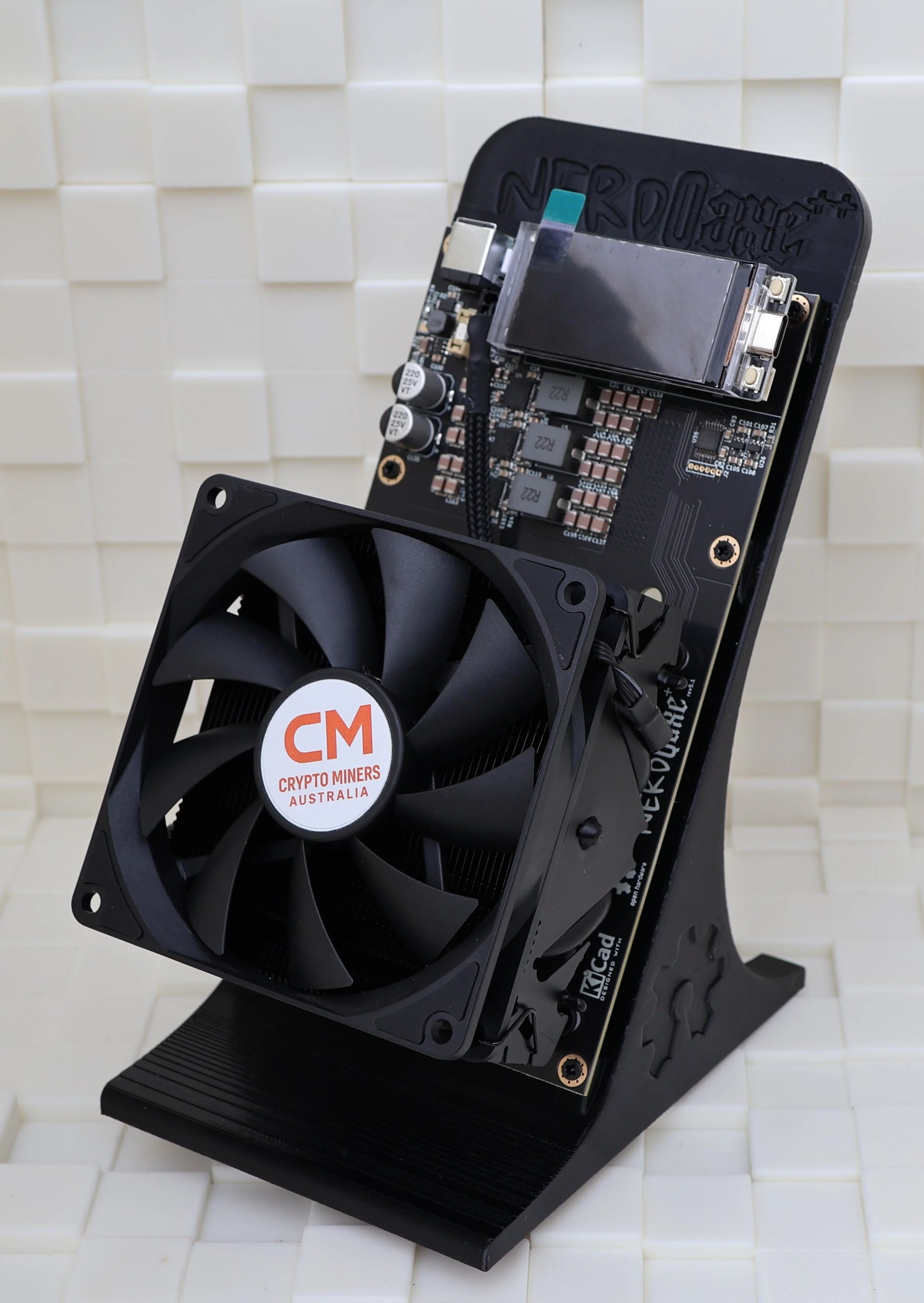
What Bitaxe and NerdQaxe++ actually have in common
At a fundamental level, Bitaxe and NerdQaxe++ do the same job in the same way.
Both are:
Open-source Bitcoin miners
Based on the same ESP-Miner firmware ecosystem
Configured through a web interface
Used with pools or solo pools
Focused on transparency and user control rather than sealed consumer design
From an operational perspective, if you know how to run one, you already know how to run the other. Setup, pool configuration, monitoring, and firmware behaviour are essentially identical.
That’s why it’s misleading to describe them as “beginner vs advanced” devices in absolute terms — the experience is fundamentally the same.
The real difference: scale, not function
Where the Bitaxe and NerdQaxe++ diverge is hashing rate per second.
A Bitaxe runs a single ASIC chip and delivers around one terahash per second. A NerdQaxe++ aggregates multiple chips to reach several terahashes per second. That’s it. There’s no special feature unlocked, no different mining mode, and no change in how Bitcoin treats the miner.
Both are doing the same work — one is just doing more of it at once.
This matters mainly in two ways:
Power and heat scale with hashrate
More chips mean more power draw and more heat to move away from the hardware. This doesn’t change how the miner is used, but it does influence where you place it and how you ventilate it.Variance changes with hashrate
With more hashpower, events like share submissions and block attempts occur more frequently. That can make the mining process feel more “active”, but it doesn’t change the underlying probabilities or guarantees.
Everything else, firmware updates, pool configuration, solo mining behaviour, remains the same.
How this plays out in a home environment
In a real Australian household, the decision between Bitaxe and NerdQaxe++ usually comes down to practical limits, not learning ability or technical skill.
A Bitaxe is easier to place almost anywhere because its power draw and heat output are minimal. While a NerdQaxe++ asks a bit more of the space it lives in because heat physics scales with power.
This doesn’t mean one is “easier” in a software sense. It simply means one occupies a larger slice of your household’s electrical and thermal budget.
That’s an important distinction, and one that often gets lost in online comparisons.
Solo mining doesn’t change between the two
Another common misconception is that NerdQaxe++ somehow “unlocks” solo mining in a way Bitaxe doesn’t.
In reality, both miners:
Connect to the same solo pools
Use the same protocols
Participate in block discovery in the same way
The only difference is 4x BM1370 chips (NerdQaxe++) compared to 1x BM1370 chip (Bitaxe Gamma). This results in more hashpower, meaning more attempts per unit of time, but the process itself is identical. There’s no special mode, advantage, or shortcut.
If you understand solo mining on a Bitaxe, you understand it on a NerdQaxe++.
Choosing between them without overthinking it
The most honest way to choose between Bitaxe and NerdQaxe++ is to ignore marketing language and ask a simple question:
How much hashpower do I want running in my house at once?
If the answer is “a small, constant amount with minimal impact,” a Bitaxe fits naturally.
If the answer is “more hashpower in a dedicated space,” the NerdQaxe++ makes sense.
Neither choice implies a higher level of expertise, commitment, or seriousness. They’re simply different points on the same spectrum.
Many people even run both; not because they serve different purposes, but because they scale comfortably within different parts of a home setup.
A note on expectations
Both devices are open-source, hobbyist mining hardware. They are not financial products, and they are not designed to produce predictable outcomes. Their value lies in transparency, learning, and direct participation in Bitcoin’s proof-of-work system.
Framing them honestly is important and ultimately benefits users far more than exaggerated comparisons ever could.
Final thoughts
The Bitaxe vs NerdQaxe++ comparison doesn’t need artificial categories or exaggerated differences. They are fundamentally the same type of miner, built on the same principles, with the same operational behaviour.
The difference is scale — and scale only.
Understanding that makes it easier to choose, easier to explain, and easier to trust the hardware you’re running.