
The Problem With Large-Screen “NerdQaxe++” Clones — And How Users Can Return to True Open Source
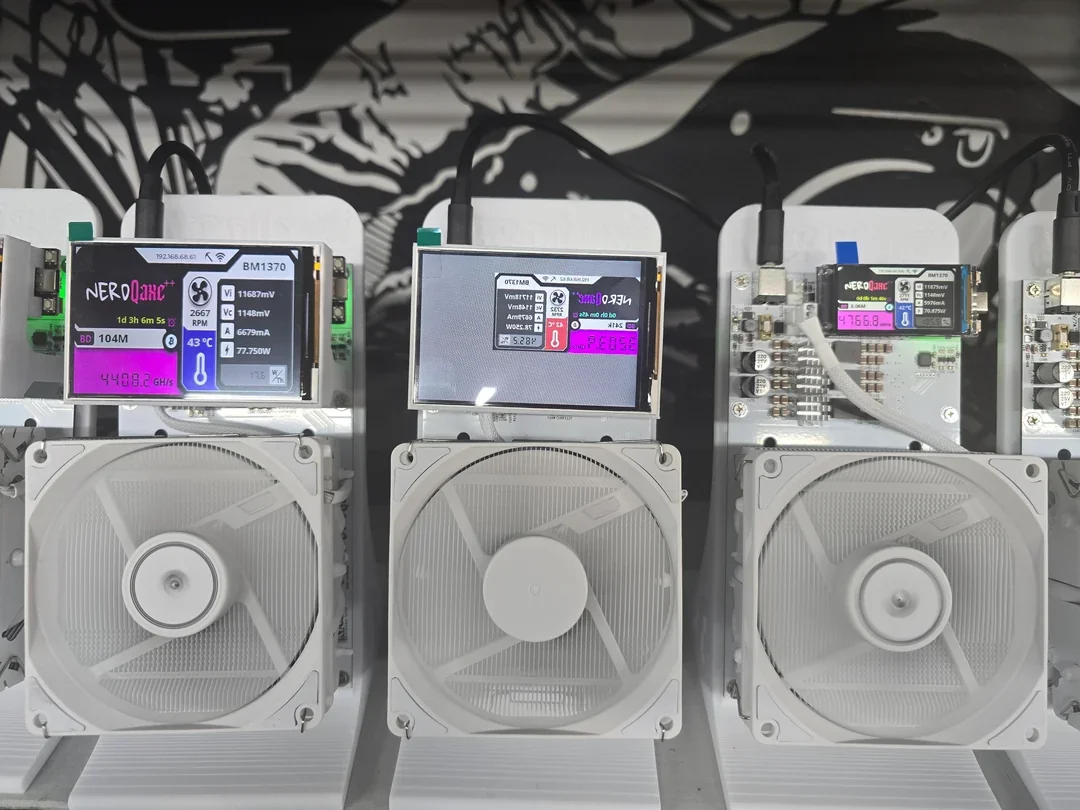
Example of 2 large screen NerdQaxe++ units next to one small screen unit. Note that the middle unit is running the open source firmware of the nerdQaxe++ and it causes issues with the display. Photo credit to reddit user U/Old-Seaworthiness874
The open-source mining community is built on a simple idea: if the hardware is published publicly and the firmware is transparent, anyone can build, improve, or maintain it. That philosophy is what powered the growth of Bitaxe, NerdAxe, NerdQaxe++, and the wider OSMU (Open Source Miners United) movement. These devices earned trust because everything about them—schematics, firmware, PCB files, BOMs—lives in the open for anyone to review.
But recently, there’s been a surge of large-screen “NerdQaxe++”-style products appearing across marketplaces, all marketed as “open source,” despite the fact that they aren’t open in any meaningful sense. They may look like the real NerdQaxe++ from the front, but under the hood they’re completely different machines built on undocumented hardware. And unlike the genuine open-source version, these clones don’t release schematics, don’t share firmware, and don’t support the community-maintained codebase.
That’s a problem—not just because it breaks the open-source licensing, but because it actively confuses newcomers who assume they’re buying something that can be updated, repaired, or maintained by the community.
What Makes These Large-Screen Variants a Problem?
The core issue isn’t the screen size, it’s the secrecy. The legitimate NerdQaxe++ uses hardware that is fully published on GitHub, which means anyone can reproduce the device or contribute improvements. The large-screen clones, however, can ship with modified PCBs, unknown display drivers, and in some cases even different ESP32 modules. None of this information is documented or released publicly, so users are stuck with whatever firmware these sellers preloaded.
Because the hardware isn’t open, the firmware can’t be open either. The original NerdQaxe++ firmware simply doesn’t run on these devices, which leaves owners locked into a closed ecosystem. And when the seller inevitably disappears (or never offered support in the first place) you’re left with a miner no one in the community can fix or update.
This kind of closed hardware being marketed as “open source” doesn’t just mislead buyers; it undermines the work that actual open-source developers put in. The OSMU community depends on transparency, contribution, and shared progress. Closed forks break that cycle.
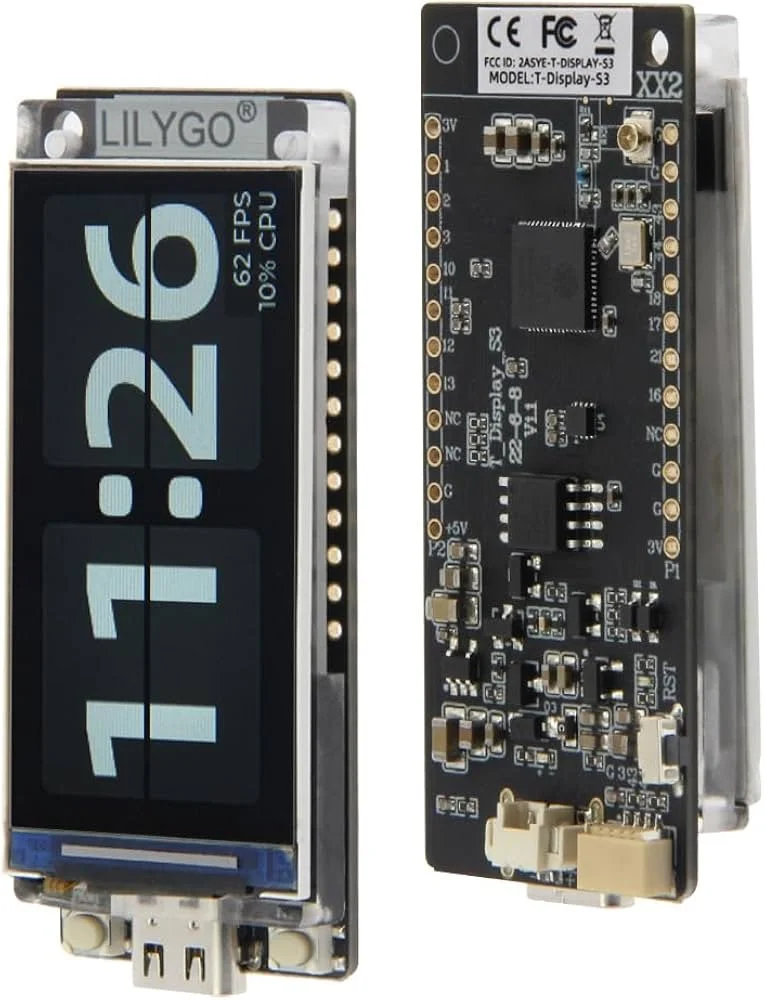
The correct lilyGO T-Display-S3 ESP32 replacement unit that works with the NerdQaxe++ open source firmware. Make sure you have the pin headers that come with the board otherwise you wont be able to attach the display to the main PCB.
A Path Back to Real Open Source
If you’re one of the people who unknowingly bought one of these large-screen variants, there is hope. Many of the clones are actually built around a standard ESP32-S3 module, and that means you can revive the device by replacing the display board with a known, open, supported module like the LilyGO T-Display-S3.
Once you have a T-Display-S3, the modual can be flashed using the official NerdQaxe Web Flasher. Simply plug it into your PC via the USB-C port, select your firmware version from the web flasher, and then install your new screen back onto your NerdQaxe++ main board. You’re now running fully open-source firmware again, maintained by real developers, updated regularly, and backed by the community. It’s not a perfect fix, but it’s a way to take back control of your device and bring it into the proper open-source ecosystem.
Why We Only Sell True Open-Source Miners
At Crypto Miners Australia, we made a clear decision from day one: we will only sell miners that follow the actual open-source guidelines set by their authors. That means hardware that is fully published, firmware that is transparent, and designs that can be reproduced by anyone. If it doesn’t appear on the official GitHub, if the schematics aren’t public, or if the firmware can’t be community maintained, it’s not something we’re willing to stock.
Supporting open-source miners isn’t just about principle; It’s about longevity, trust, and freedom. Owners should be able to flash new firmware, repair their hardware, clone their device, or build their own improvements without dealing with locked-down systems.
The Bottom Line
The large-screen “NerdQaxe++” clones might look attractive at first glance, but open-source hardware is about more than appearances. Without documentation, without public firmware, without schematics, and without community support, these devices undermine the very spirit that made Bitaxe and NerdQaxe++ successful.
The good news is that the open-source path is always open, you can still bring a cloned miner back into the ecosystem with the right display module and the official web flasher. And going forward, choosing genuine open hardware helps keep the community strong, keeps innovation moving, and ensures that users remain in control of the technology they buy.